
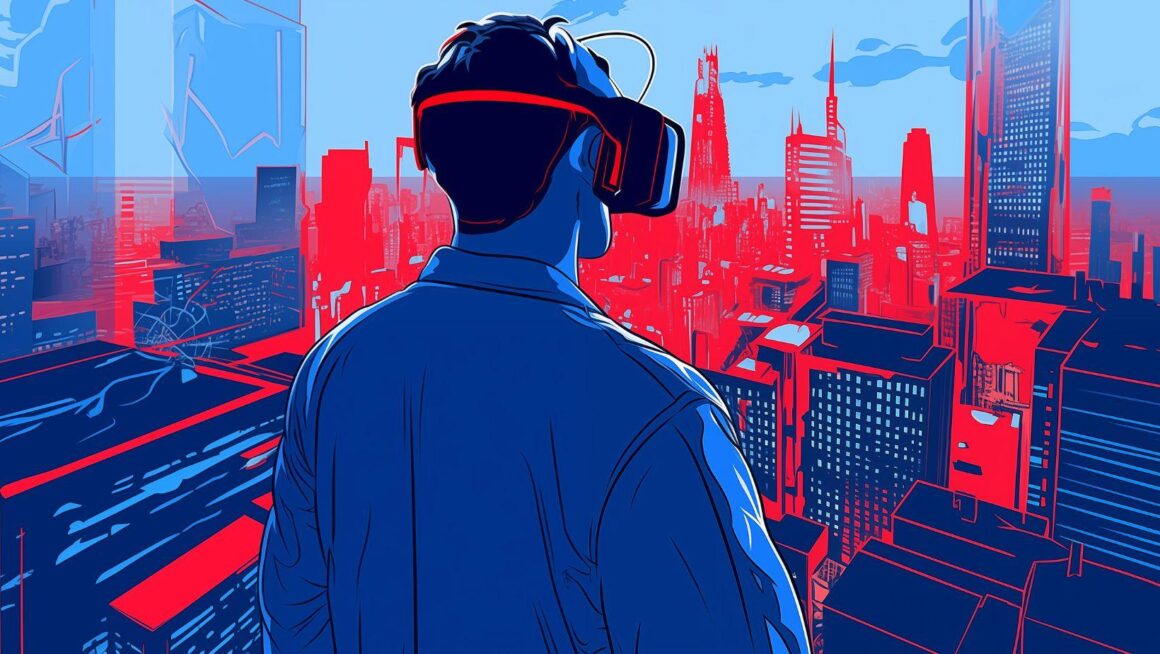
Corporate training used to mean sitting in a stuffy room at nine in the morning pretending to care about a slideshow while secretly checking emails under the table. Most people have been through that kind of training at least once, and honestly, half the information disappears from your brain before lunch. It felt more like surviving a meeting than actually learning something useful.
That’s a big reason why companies have started looking for different ways to train staff. They want people to actually remember things, stay engaged, and feel prepared for real situations instead of just ticking a box saying they completed another course. VR has suddenly become a huge part of that shift. And not just in tech companies either. Retail, healthcare, logistics and finance businesses are all getting involved now.
What makes virtual reality interesting is that it turns training into something people actually experience instead of just watching passively. It feels less like school and more like being dropped into a real situation where you have to react, think and solve problems properly. That hands-on feeling changes how people absorb information.
Why VR training feels more real
The biggest difference with VR is immersion. When someone puts on a headset, they’re not just staring at information on a screen anymore. They’re inside a simulated environment that feels much closer to reality. It tricks the brain in a surprisingly effective way.
That changes how people learn. Instead of memorising theory and hoping they remember it later, employees can physically practise tasks and situations in a safe environment. It sticks in your head better because your brain treats the experience more like something that actually happened. That’s a huge deal for jobs where fast decisions matter.
For example, somebody working in customer service could practise dealing with difficult clients without the pressure of messing up in front of a real customer. Medical staff can rehearse emergency situations. Warehouse workers can train around safety hazards without anyone actually being in danger. Pilots and surgeons have already been using simulation-based learning for years for exactly this reason.
It also helps people build confidence. Loads of employees get nervous during traditional training sessions, especially if they’re expected to speak in front of groups or answer questions on the spot. VR gives people space to learn at their own pace without feeling judged every five seconds. That alone makes training feel less stressful for a lot of people.
Training stops feeling like a chore
One thing companies are finally realising is that attention spans are absolutely cooked these days. Most employees already spend hours staring at screens, replying to messages and jumping between meetings. Throwing another dull online training module at them usually doesn’t go down well. People zone out ridiculously fast now.
VR feels different because it’s interactive. You’re moving around, making decisions, responding to scenarios and actually participating. That naturally keeps people more focused. Instead of multitasking during training, employees are pulled into the experience properly.
It’s a bit like the difference between reading about driving a car and actually getting behind the wheel. You can understand the theory all you want, but experience teaches you things that books and slides never fully can. Muscle memory and repetition matter more than people think.
A lot of workers also say VR training feels less repetitive. Traditional corporate learning can feel weirdly robotic sometimes, whereas VR creates situations that feel more natural and dynamic. Even simple things like spatial audio and movement make the experience feel more alive.
The tech has improved loads
A few years ago, VR still felt a bit clunky. The graphics weren’t amazing, headsets were bulky, and some people got motion sickness after ten minutes. That’s changed massively. The newer systems feel much smoother and less awkward to use.
Devices like the Meta Quest 3S have made the whole experience smoother and way more user-friendly. The visuals feel sharper, movement feels more natural, and the setup process is nowhere near as complicated as it used to be. That matters in workplaces where people don’t have time to mess around with technical problems.
That matters because if technology feels frustrating, people switch off immediately. Nobody wants to spend training time wrestling with cables or trying to figure out confusing controls. Modern VR systems are much more intuitive, so employees can just get on with the actual learning. The easier the tech feels, the quicker people accept it.
It can save businesses a lot of money
At first glance, VR training sounds expensive. Loads of people assume only massive corporations can afford it, but that’s not really true anymore. The price of VR equipment has dropped quite a bit over the last few years.
Traditional training costs pile up quickly, travel, hotels, instructors, printed materials, venue hire and time away from work all add up. VR cuts a lot of those expenses down because people can train remotely while still getting a realistic experience. For global companies especially, that can save a ridiculous amount of money.
It’s especially useful for companies with teams spread across different cities or countries. Instead of flying everyone to one location, employees can join the same virtual training session from wherever they are. That also makes scheduling much easier.
And for industries where safety matters, VR is honestly a game changer. Workers can practise dangerous tasks or emergency situations without anyone getting hurt. Mistakes become learning opportunities instead of expensive disasters. That lowers both risk and stress levels during training.
Remote work changed everything
The rise of remote and hybrid work pushed companies to rethink how training works altogether. A lot of businesses struggled at first because onboarding people through endless video calls just wasn’t very engaging. Most new hires ended up overwhelmed or disconnected.
VR creates more of a shared experience, even when people are physically miles apart. New hires can walk through virtual office spaces, meet digital versions of colleagues and interact in ways that feel more personal than another awkward video meeting. That social aspect matters more than companies used to think.
That sense of presence makes a surprisingly big difference. People tend to feel more connected to teams when they share experiences instead of just staring at tiny webcam boxes all day. It helps remote workers feel less isolated too.
People still think VR is “too futuristic”
There’s definitely still a mindset in some workplaces that VR sounds overly complicated or gimmicky. A few managers hear “virtual reality” and instantly picture teenagers playing games in dark bedrooms. The reputation from gaming culture still follows the technology a bit.
But businesses are starting to see it differently now. The technology has matured a lot, and the practical uses are becoming harder to ignore. Especially when companies notice employees engaging more with training content.
Most employees actually adapt to VR quicker than expected too. Once people spend a little time inside a virtual environment, it stops feeling strange pretty fast. It just becomes another tool people use to work, learn and collaborate more effectively.