Retention is rarely about compensation alone. Surveys of departing employees consistently show the same underlying themes: they did not feel their work mattered, they could not see where the company was going, or they felt disconnected from the team in ways that gradually became intolerable. In a hybrid environment, those risks are amplified because the informal signals that used to communicate belonging and purpose, the overheard conversation, the visible recognition, the spontaneous inclusion, no longer happen automatically. The organizations that retain their best people in a hybrid world are not the ones offering the biggest bonuses or the most flexible policies. They are the ones that have built an environment where every employee, regardless of where they are sitting, feels connected to work, to strategy, and to the team. That environment is built on project management tools designed to close the distance that hybrid work creates.
Connecting every employee to strategic direction with Lark OKR
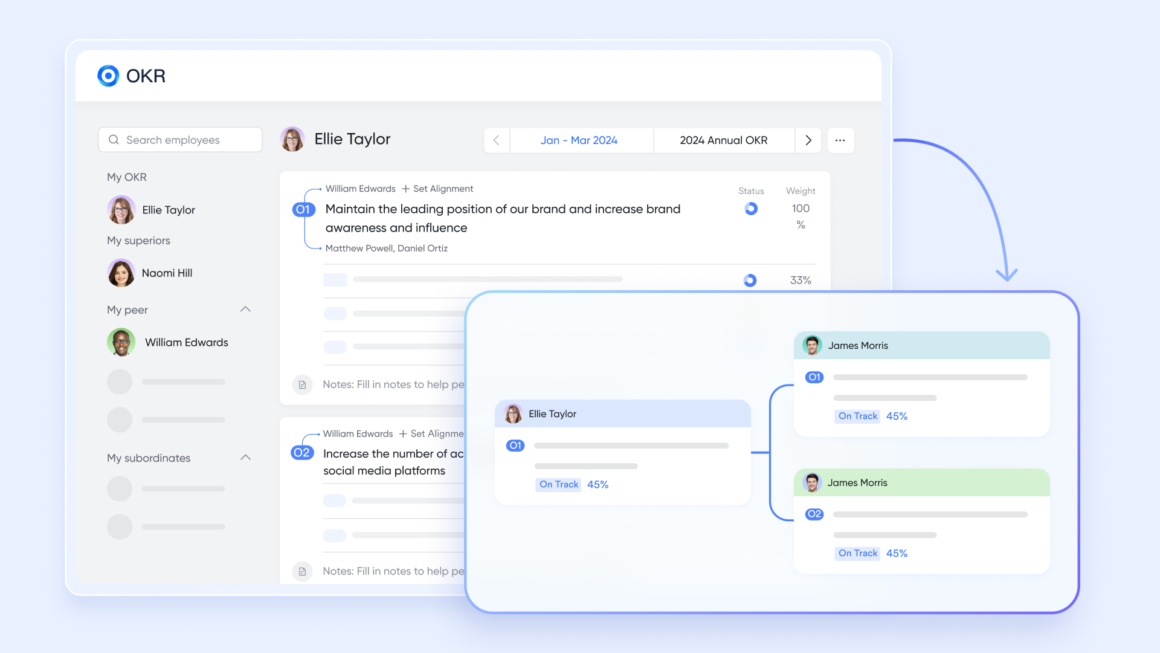
- Company-wide objective visibility from any location. Every team member, whether in the office or working remotely, can see the full hierarchy of company and department objectives in Lark OKR. The strategic context that used to be communicated implicitly through physical proximity is now explicit and always accessible, so no one has to be in the right room at the right time to understand what the organization is trying to achieve.
- Individual key results linked to team objectives. Every employee can set their own key results that connect directly to their team’s goals, creating a visible thread between their daily work and the company’s direction. That connection is one of the most reliable predictors of employee engagement, and Lark OKR makes it structural rather than dependent on a manager articulating it in every one-on-one.
- Regular check-in cycles built into the OKR framework. Teams can build structured check-in rhythms into their OKR cycles, so that progress conversations happen on a predictable schedule rather than only when something goes wrong. Consistent communication about how work is going is one of the highest-leverage retention behaviors a manager can practice.
Keeping the social fabric intact across locations with Lark Messenger
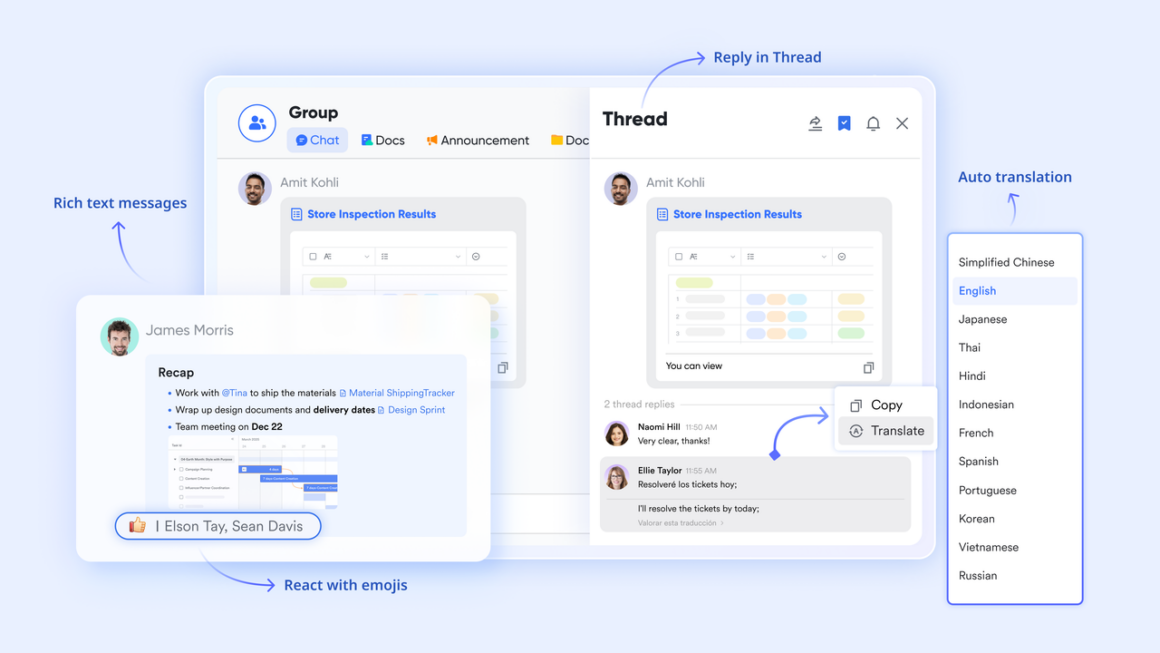
- Group folder organization for community as well as work. Lark Messenger allows teams to organize group chats into labeled folders, which means dedicated channels for non-work connection, team culture, and recognition can sit alongside operational channels without creating noise for team members who prefer to keep the two separate.
- “Rich Formatting” for human, expressive communication. Formatted messages, annotated screen captures, and emoji reactions make day-to-day communication feel more like a conversation and less like a transaction. For hybrid teams where casual connection does not happen naturally in the hallway, the texture of how people communicate in chat matters more than most leaders realize.
- “Real-time Auto Translation” for globally inclusive teams. Team members across different language backgrounds can communicate in their native language without the social cost of always deferring to a dominant language. Inclusion at the communication level is one of the clearest signals an organization can send about how seriously it takes belonging.
Making hybrid scheduling fair for everyone with Lark Calendar
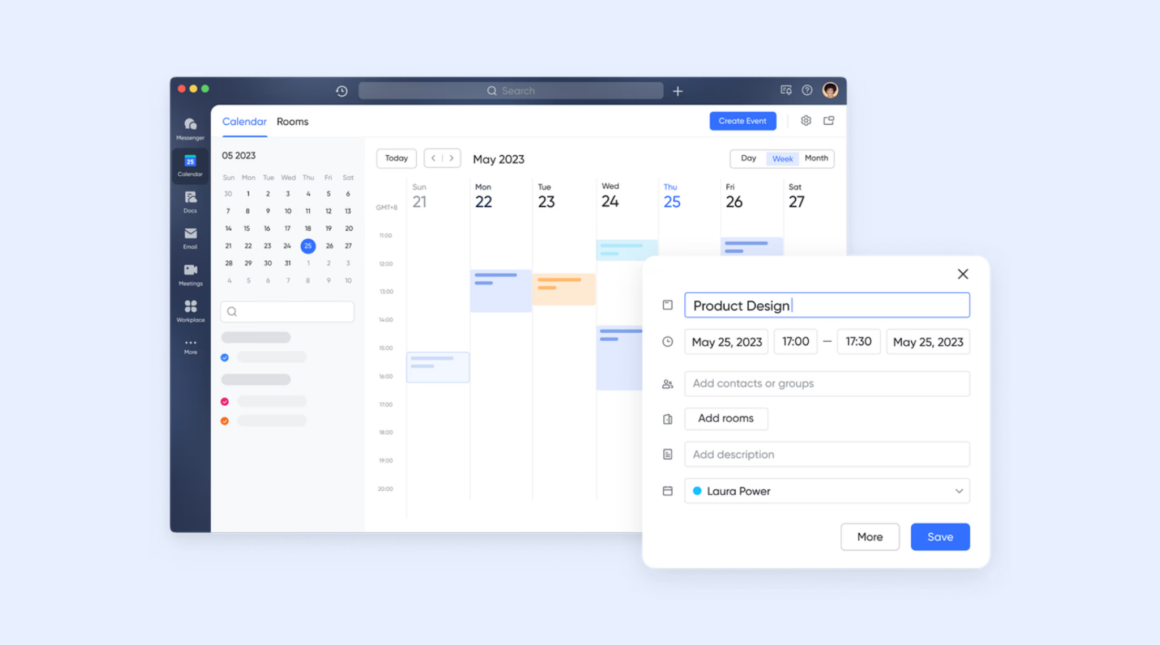
- “Meeting Groups” for equal preparation regardless of location. Every calendar event in Lark generates a linked group chat where agendas, pre-reads, and context are shared before the meeting. Remote participants arrive with the same preparation as in-office colleagues, removing the asymmetry that makes hybrid meetings feel tilted toward those who are physically present.
- “Calendar Subscription” for visibility into team rhythms. Hybrid employees can subscribe to shared team calendars so they always know when the team is gathering, when important decisions are being made, and when informal events are happening. Visibility into the team’s schedule is a basic prerequisite for feeling included in it.
- “Schedule in Chat” for frictionless time coordination. Finding time to connect with a manager or peer should not require multiple exchanges across multiple tools. The ability to confirm a slot directly within a conversation removes one of the small frictions that, accumulated over time, makes remote work feel more isolating than it needs to.
Giving every employee ownership over their own documentation with Lark Docs
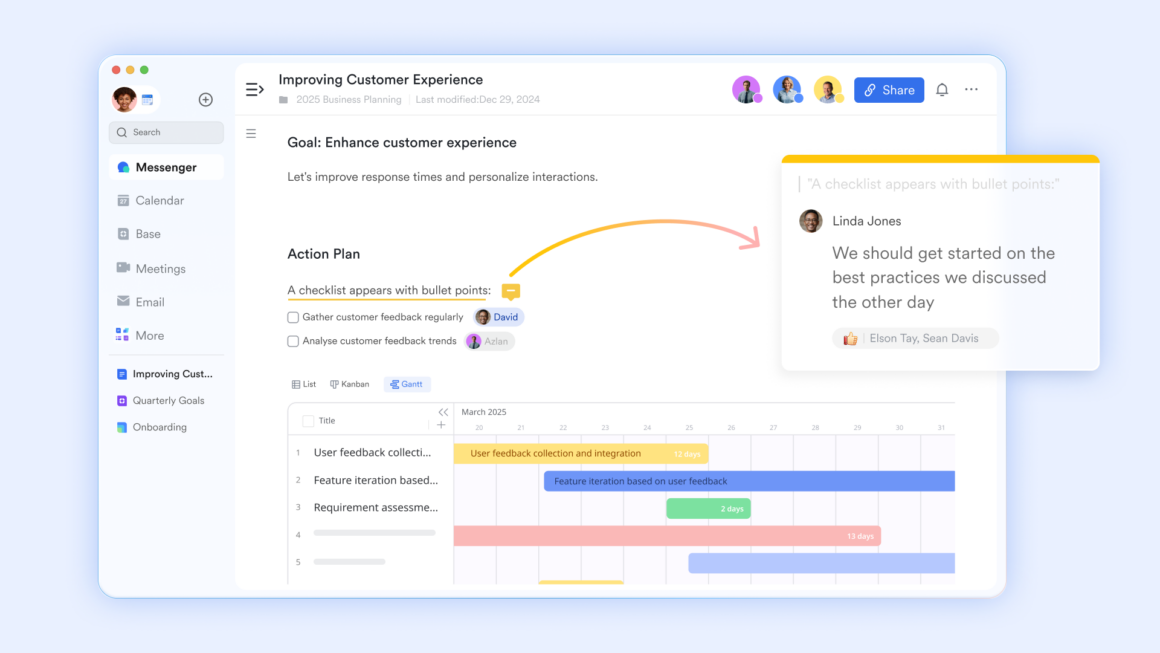
- Document templates for consistent contribution at every level. Lark Docs templates allow organizations to build standardized formats for self-reviews, development plans, project retrospectives, and career conversations. Every team member works from the same structured starting point, which levels the playing field between employees who have direct access to their manager and those who are working across a time zone gap.
- “Version History” for transparent, traceable development records. Performance and development documents that evolve over time carry a complete edit history, so the record of a career conversation or a goal revision is permanent and recoverable. Employees who feel that their development record is trusted and verifiable are more likely to trust the organization that maintains it.
- Real-time co-editing for collaborative goal-setting. Managers and team members can build development plans together inside a shared Lark Docs, with both parties’ contributions visible simultaneously. Co-authorship in the development process creates a stronger sense of ownership over the outcome than a plan written by a manager and handed down for review.
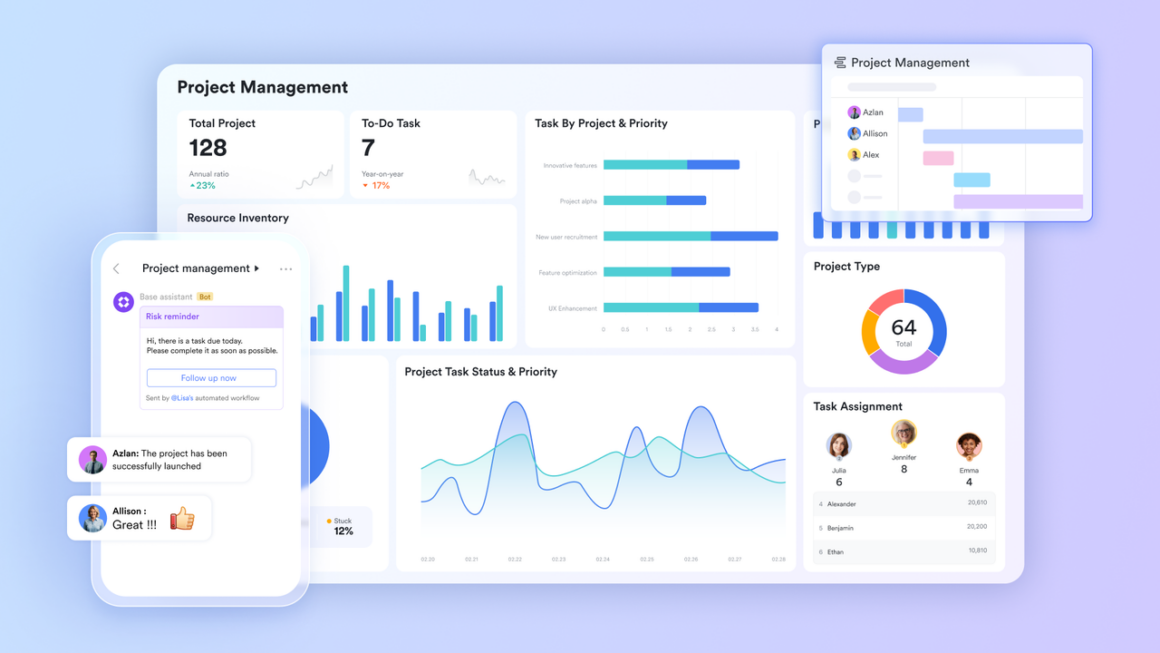
Making individual work visible and manageable with Lark Base
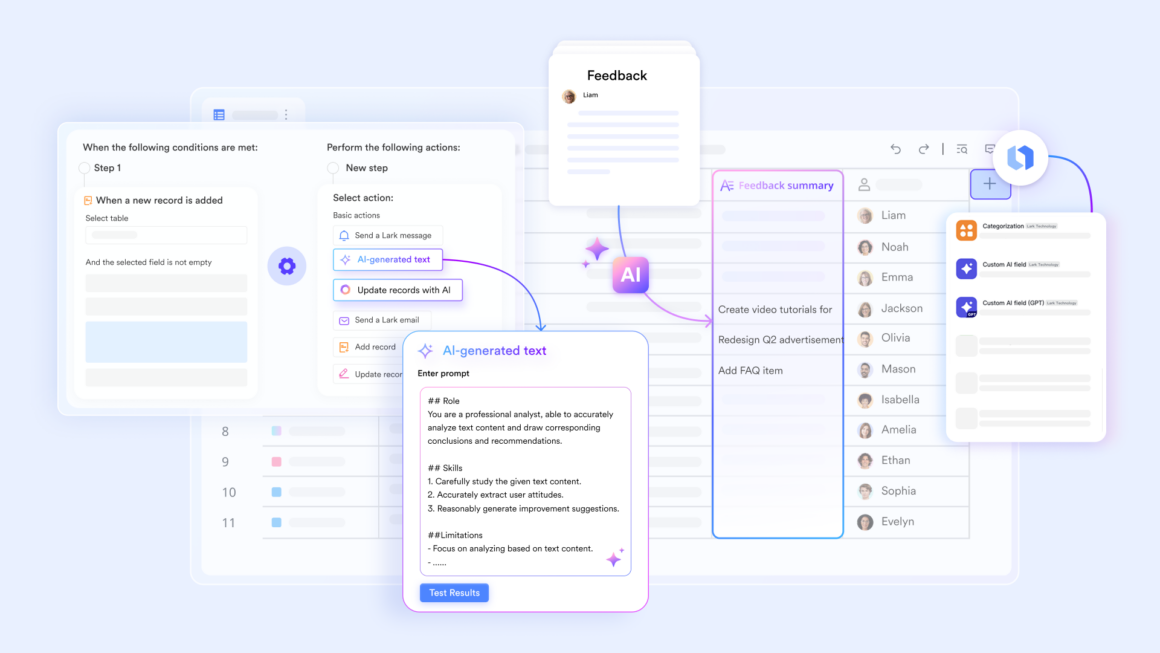
- “Personal task views” for individual workflow organization. Each team member in Lark Base can create a personal view of the shared operational database that shows only their own tasks, filtered and sorted in the way that works best for them. Their personal view does not affect what others see, so every team member can organize their work their own way without disrupting the shared record.
- Automated deadline reminders for self-managed accountability. Lark Base can be configured to send automated reminders to individuals as deadlines approach, so team members working independently across different schedules receive the same prompts that in-office colleagues get from ambient awareness of approaching deadlines. The accountability infrastructure works the same way regardless of location.
- Live dashboards for personal performance visibility. Team members can build views of their own Base records that show their contribution to the team’s operational output. Seeing the concrete shape of their own work in a shared operational database reinforces a sense of meaningful contribution that is one of the most direct drivers of retention.
Bonus: Why retention tools rarely solve retention problems
When organizations see attrition rising, the first response is usually to add a retention-focused tool. They invest in platforms like Lattice or Culture Amp for performance and engagement tracking, add Slack channels dedicated to recognition, and supplement Zoom with social features designed to replicate the office experience. Each tool addresses a symptom without changing the underlying experience of working in a fragmented environment.
The honest evaluation most HR leaders arrive at, when they look at Google Workspace pricing alongside the stack of point solutions they have assembled, is that the cost of the tools designed to compensate for the fragmentation often exceeds the cost of the foundational platform itself. Lark removes the need for those compensating tools by building the conditions for connection, visibility, and meaningful work into the daily workspace rather than layering them on top of a system that was never designed to provide them.
Conclusion
Retaining top talent in a hybrid world is not a perks problem. It is an environmental problem. The employees who stay are the ones who feel connected to the organization’s direction, seen by their colleagues, and in control of their own contribution. A unified set of productivity tools that builds those conditions into every working day is the most durable retention investment a hybrid organization can make.