
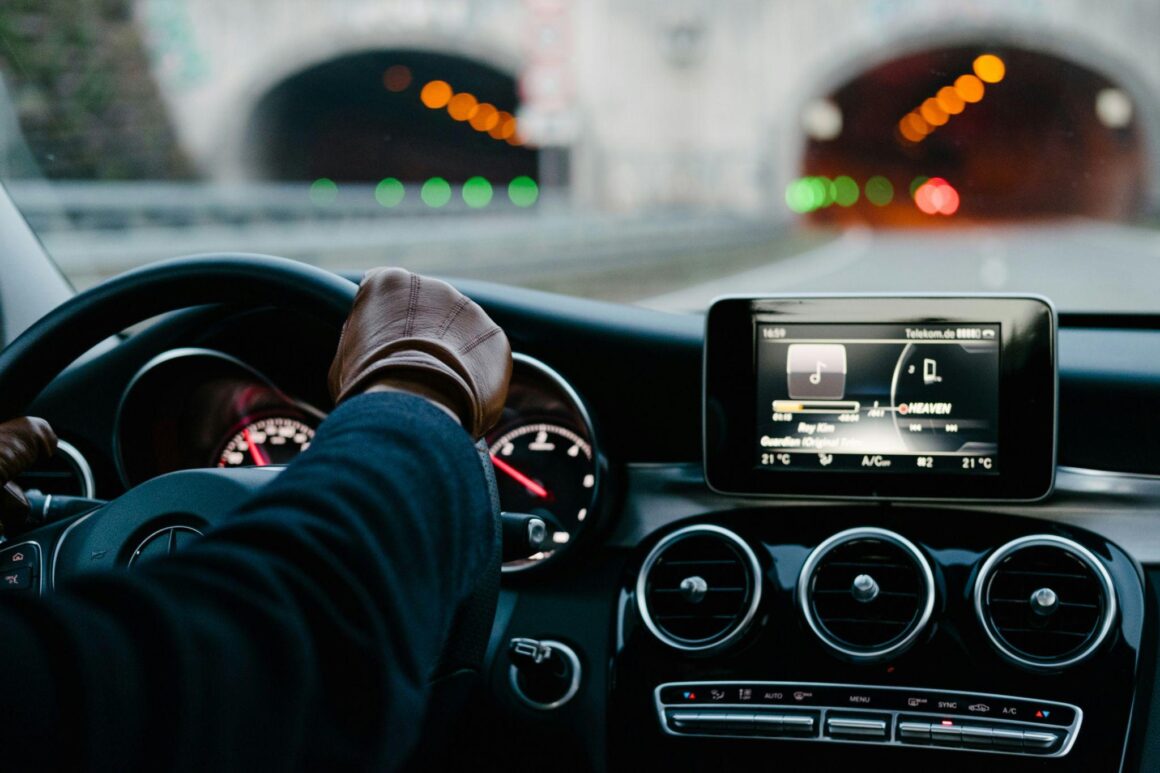
For most of automotive history, the relationship between a driver and their vehicle’s internal condition has been defined by uncertainty. What was happening inside the engine, the transmission, the braking system and the dozens of other mechanical and electrical systems that make a car function was largely invisible until something went wrong.
Drivers operated on schedules, on mileage intervals, on the advice of mechanics they hoped they could trust and on the intuition that came from paying attention to how the car felt and sounded. It was an imperfect system that worked tolerably well for routine maintenance but consistently failed at the one thing that matters most: identifying developing problems before they become expensive failures.
Connected car technology is changing this fundamental dynamic, and the change is happening faster and more comprehensively than most drivers have noticed. The vehicle that communicates its own condition in real time, that identifies developing problems before they manifest as symptoms, and that enables a more informed and more proactive approach to maintenance is not a concept vehicle at a technology exhibition. It is the car in the driveway of a growing number of households, and the drivers who understand what it is capable of are consistently better off for that understanding.
What Connected Car Technology Actually Means
The term connected car covers a broad and sometimes loosely defined category of technology, and clarifying what it actually encompasses is the necessary starting point for understanding its implications for preventive maintenance.
At its most basic level, a connected car is one that transmits data from its onboard systems to an external destination, whether that is a manufacturer’s cloud platform, a third-party telematics service, a smartphone application or some combination of these. The data being transmitted typically includes vehicle location, driving behaviour metrics and, most relevantly for maintenance purposes, the real-time readings from the hundreds of sensors monitoring the vehicle’s mechanical and electrical systems.
The connectivity layer transforms what was previously static diagnostic data, accessible only when a mechanic physically connected a scanner to the vehicle’s diagnostic port, into a continuous stream of information that can be monitored remotely, analysed automatically and acted upon proactively. This transformation from episodic to continuous monitoring is the fundamental shift that makes connected car technology so significant for preventive maintenance.
Modern vehicles are equipped with sensor networks of considerable sophistication. Engine management systems monitor dozens of parameters including fuel trim, ignition timing, coolant temperature, oil pressure and exhaust gas composition. Transmission control modules track fluid temperature, shift timing and clutch engagement characteristics.
Battery management systems monitor state of charge, state of health and charge acceptance rates. The data generated by these systems, when made accessible and interpretable, is a comprehensive real-time picture of vehicle health that no previous generation of drivers has had access to.
From Scheduled to Condition-Based Maintenance
The most practically significant impact of connected car technology on preventive maintenance is the shift it enables from scheduled, interval-based servicing to condition-based maintenance that responds to the actual state of the vehicle rather than the passage of time or the accumulation of mileage.
Conventional maintenance schedules are built around conservative intervals designed to ensure that the average vehicle in average operating conditions does not develop problems between service visits. They are appropriate for the population of vehicles they are designed for but are necessarily imprecise for any individual vehicle, because operating conditions vary enormously between drivers, climates and usage patterns. A vehicle used primarily for short urban trips accumulates engine wear in ways that are different from one used mainly for highway driving, and a maintenance schedule calibrated for one profile may be inadequate or unnecessarily frequent for the other.
Condition-based maintenance uses real sensor data to determine when specific components or fluids actually need attention, rather than when the calendar or odometer says they should. An oil monitoring system that tracks the actual degradation of engine oil through measurements of viscosity, contamination and acidity can determine when an oil change is genuinely needed based on the specific conditions the oil has experienced, rather than after a fixed interval that may be conservative or insufficient depending on how the vehicle has been driven.
According to the American Automobile Association (AAA), the shift from interval-based to condition-based maintenance has the potential to reduce both unnecessary maintenance expenditure and the incidence of component failures that occur between scheduled service visits, delivering better outcomes at lower cost for drivers who have access to the data needed to implement it.
Early Warning Systems That Actually Work

Beyond condition-based servicing, connected car technology is enabling a category of early warning capability that addresses the specific failure modes that have historically been most costly for vehicle owners: the sudden, unexpected failures that arrive without apparent warning and generate large repair bills at the worst possible moment.
The reality, which connected car data is making increasingly visible, is that these failures are rarely as sudden as they appear. Most major mechanical failures are preceded by measurable changes in sensor readings that indicate a developing problem weeks or months before the failure occurs. An alternator that is beginning to fail shows characteristic patterns in its charging voltage output long before it stops charging the battery.
A transmission that is developing hydraulic pressure issues produces measurable changes in shift timing and engagement characteristics before those changes become noticeable to the driver. A cooling system component approaching failure shows temperature deviation patterns that precede the overheating event by a significant margin.
Connected car platforms that apply machine learning to continuous sensor data streams can identify these patterns and generate early warnings that give drivers and mechanics the opportunity to address developing problems at a stage when intervention is still relatively inexpensive. The alternator that is flagged for inspection because its charging pattern has deviated from normal costs a fraction to replace proactively compared to the downstream consequences of a battery failure and potential electrical system damage that a sudden alternator failure can produce.
For transmission-related early warnings, which are among the most financially significant given the cost of transmission repair and replacement, understanding how to find a used automatic gearbox for your car becomes a relevant and timely question when connected monitoring identifies transmission health metrics that suggest a replacement may be needed in the foreseeable future. Having this information in advance allows the driver to research options, source a quality used unit at a competitive price and plan the repair at a time and cost of their choosing rather than in response to an emergency.
The Mechanic Relationship in a Connected World
Connected car technology does not diminish the role of the professional mechanic. It changes the nature of the interaction between driver and mechanic in ways that most experienced technicians find beneficial rather than threatening.
A driver who arrives at a workshop with a detailed report from their connected car platform, showing the specific sensor readings that triggered a maintenance alert, gives their mechanic a starting point for diagnosis that dramatically reduces the time spent identifying the problem. The mechanic can focus on verification and repair rather than diagnostic exploration, completing the job more efficiently and at lower total cost to the customer.
The transparency that connected car data provides also improves the quality of the conversation between driver and mechanic about maintenance priorities. When both parties have access to the same objective data about the vehicle’s condition, the discussion about what needs to be done immediately, what can be monitored and what can safely wait becomes more productive and more honest than a conversation based solely on the mechanic’s assessment of a vehicle they have just encountered.
According to McKinsey and Company, the integration of connected vehicle data into professional workshop workflows is one of the most significant efficiency opportunities in the automotive service sector, with the potential to reduce diagnostic time and improve first-time fix rates substantially. Workshops that develop the capability to receive and interpret connected car data from customer vehicles are positioning themselves for competitive advantage as this technology becomes standard across the vehicle fleet.
Accessibility and the Democratisation of Vehicle Intelligence
One of the most important aspects of connected car technology from a societal perspective is the extent to which it is becoming accessible across the vehicle market rather than remaining a premium feature available only on expensive new vehicles.
Aftermarket OBD2 adapters that provide connectivity and data access for vehicles without factory-fitted connected car systems have brought a meaningful subset of connected car capabilities to the existing vehicle fleet at a cost of as little as twenty to fifty dollars. Applications that interpret the data from these adapters and present it in accessible formats have extended this accessibility further, giving owners of older vehicles access to diagnostic and monitoring capabilities that were previously available only on new premium vehicles.
This democratisation of vehicle intelligence is significant because the drivers who stand to benefit most from connected car technology are often those with the least financial margin for unexpected repairs. A driver who is keeping an older vehicle running on a tight budget and who cannot afford a major unexpected repair is precisely the driver for whom early warning of a developing problem has the greatest practical value. The expanding accessibility of connected car capabilities to this demographic is one of the more quietly consequential technological developments in the consumer automotive space.
The Preventive Maintenance Mindset of the Future
Connected car technology is not just changing what drivers know about their vehicles. It is changing how they think about vehicle ownership and maintenance as a whole. The driver who receives regular, data-driven updates on their vehicle’s condition develops a different relationship with maintenance than one who interacts with their car only when something goes wrong.
This shift in mindset, from reactive to proactive, from uncertain to informed, from surprised by costs to in control of them, is perhaps the most valuable output of the connected car revolution. The technology provides the data. What drivers do with that data determines whether it translates into the lower repair costs, longer vehicle life and more predictable ownership experience that it makes possible.