
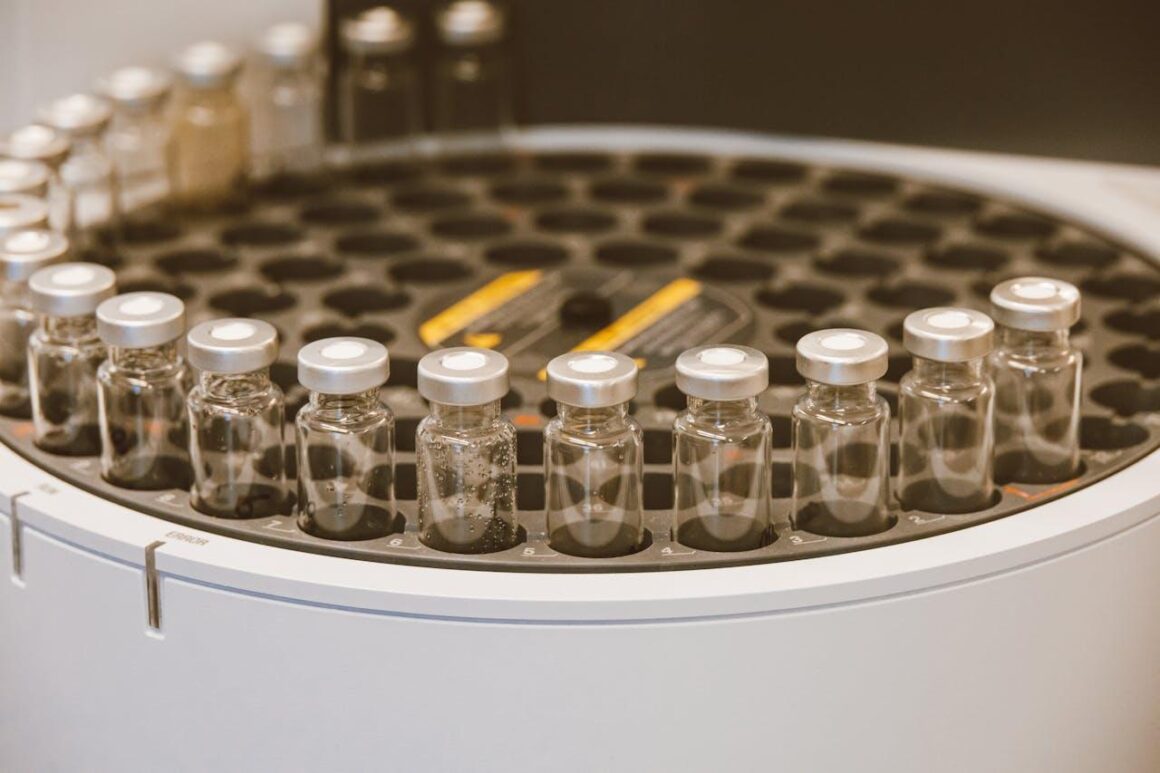
Science today moves quickly, though not simply due to sharper ideas. Instead, progress comes mainly from powerful new testing methods. Now, those who run labs encounter growing strain because speed and consistency are essential, yet biological and chemical processes resist human accuracy when expanded.
Most scientists know this tension well: deliver larger volumes of data while holding standards firm. Nowhere has change been more clear than in automated systems, which were once optional but are now essential.
With integration of sophisticated tools, laboratories slowly close the distance separating large-scale production from precise results needed for major scientific advances.
Lab Automation Grows Key in Today’s Research
What explains the sudden interest in the so-called “lab of the future”? Mainly, traditional methods have reached their limits. With science growing more dependent on data and large-scale testing, hands-on workflows start slowing progress down.
A study by Deloitte shows digitisation in life sciences now goes beyond programs; it includes hardware connections that cut out inconsistencies caused by human actions. Hours spent at the pipette take more than physical tolls, as errors creep into results when hands tire.
As scrutiny grows around consistent findings, machines offer steady precision across trials. Reproducing a study run today on one continent becomes feasible elsewhere the next day through repeatable automated steps.
10 Lab Automation Advances Changing How Science Work Gets Done
1. AI-Driven Workflow Optimisation
Now shaping entire studies, artificial intelligence goes beyond number processing. Predicting successful molecular pairings through machine learning cuts down lengthy experimental guesswork. Lab schedules shrink dramatically when procedures are refined in advance.
With protocols adjusted prior to physical testing, research phases accelerate under smart systems. Timing improves because digital models anticipate outcomes ahead of human execution.
2. Automated Liquid Handling Systems
What drives an assay forward? Accuracy above all. Today’s liquid handler technologies aim for steady, fine-tuned delivery, cutting down hands-on work step by step. Modern liquid handler technologies are increasingly designed to deliver consistent, high-precision dispensing while reducing manual intervention, making them a cornerstone of scalable laboratory workflows.
Automation takes charge by handling samples or running dilution series to remove tiny shifts in volume that cloud results. It goes beyond faster processing; lower contamination odds come hand in hand with higher output. Reliability grows when human variables fade.
3. Miniaturisation and Microfluidics
Now beginning to emerge clearly: movement toward lab-on-a-chip systems. As reaction spaces grow smaller, so does the need for large samples. Cost drops sharply, not because equipment changes, but due to less reliance on costly chemicals.
Tiny channels guide fluids precisely, enabling detailed analysis even with minimal material. Efficiency rises when each microliter performs multiple roles during testing.
4. Robots and Machines Doing Jobs
Robotic arms shifting plates between stations now appear often in today’s biotech centres. Integrated systems handle full processes with minimal human involvement. Labs equipped this way operate through the night, running experiments without active supervision. Productivity gains come simply by using existing space more continuously, avoiding added labour costs during late hours.
5. Cloud-Connected Lab Systems
Now fading into the past: moving files by hand using small drives. Devices tied to online networks let scientists watch experiments from anywhere. Whether at home or sitting in a lecture hall, status updates stay within reach. Because links exist across continents, groups work together without delay, watching numbers change as they go and fixing steps while data flows.
6. Integrated Data Management Platforms
When information stays hidden, its value drops fast. Systems that combine tools create one reliable reference spot by connecting real-world specimens with electronic records.
Because each step gets recorded, meeting standards becomes easier while safeguarding ownership rights. As Technia points out, such setups support next-generation labs where transparency matters most, as each measurement ties back to its origin without gaps.
7. Smart Devices Connected in Lab Settings
Most lab tools now share data through IoT networks. Inside refrigerators, growth chambers, and spinning machines, tiny sensors keep watch without pause. When something shifts (for instance, vibration rises or temperature drifts), the network notices first.
Trouble with a motor? Warnings arrive early, stopping disasters mid-experiment. Valuable work stays safe, mostly because machines speak up before breaking.
8. High-Throughput Screening Technologies
When working in genomics or drug development, handling thousands of samples at once transforms research speed. Thanks to today’s powerful computing systems, analysing vast amounts of output becomes manageable within tight timelines.
What once took years now finishes in just several weeks, reshaping how quickly discoveries can move forward. Performance gains from modern processors make such rapid progress realistic across large-scale experiments.
9. Modular Scalable Automation
Starting automation does not require millions in funding. With modular setups, labs can begin with a single station, then gradually integrate more units over time. Smaller biotech firms gain access to advanced tools through step-by-step expansion. Growth happens piece by piece, matching resources to demand without upfront strain.
10. Smart Error Detection and Quality Control
Errors get caught before they spread. Today’s machines notice when something goes wrong on their own. A bubble inside a pipette tip? An unsealed well plate? These issues show up right away. Automated checks highlight irregularities the moment they occur. Because of this, one small fault does not ruin a full run. Results stay trustworthy. Mechanical glitches do not slip through unnoticed.
These Innovations Shape Scientific Discovery
What once seemed out of reach now moves within grasp. Not only are methods accelerating, but entirely new paths in discovery have opened up. Because experiments repeat quickly, therapies reach patients much sooner than before.
Over time, as machines handle routine tasks, more labs gain power to explore boldly. Now even compact laboratories achieve assay accuracy matching that of major international players.
Studies appearing in Nature highlight how automation and dense data workflows are reshaping science, fostering worldwide networks where findings gain strength through openness, leading to deeper societal influence.
Automation Adoption Considerations for Labs
Jumping into automation isn’t just about purchasing new technology; it demands planning. How well these systems fit within existing teams matters most. Does the interface feel natural, or will staff spend endless weeks learning it?
Growth potential cannot be ignored, as a tool that becomes outdated fast becomes dead weight. Balance matters more than cost alone when choosing tools for research. Though pricier options seem stronger at first, they do not always serve evolving needs well.
What works today might fail tomorrow if it cannot shift with new questions. Flexibility often outweighs initial performance. The smartest pick adjusts quietly as priorities change. Efficiency grows where systems bend instead of break.
Conclusion
At this stage, lab automation is no longer a futuristic “nice-to-have”—it has become the foundation of competitive research. The innovations we see today, from AI-led design to smart liquid handling, are evolving at a breakneck pace.
For labs looking to stay at the cutting edge, early adoption isn’t just about staying relevant; it’s about gaining a distinct advantage in a crowded field. While the human element of science (the curiosity and the intuition) will always be the most important part of the equation, these automated tools are what allow that brilliance to scale.